

Overview
The Usage Dashboard gives Operators a centralized view of AI usage across the Zylon platform. It helps answer operational questions such as how much token consumption is happening, which gateways are active, and whether knowledge, file, and web-search activity is being used. Use the dashboard when you need to:- Monitor AI usage over time.
- Compare total usage with per-gateway usage.
- Review usage for one or more gateways.
- Inspect activity associated with API tokens.
- Understand how Workspace activity contributes to platform usage.
Understanding usage collection
Workspace and API Token requests are routed through a Gateway. Each Gateway records the usage it handles, so the Usage Dashboard reports activity by Gateway. Workspace requests use Workspace sessions instead of API Tokens. They appear in Gateway totals when Keys is set to All tokens, but they do not appear when filtering by a specific API Token.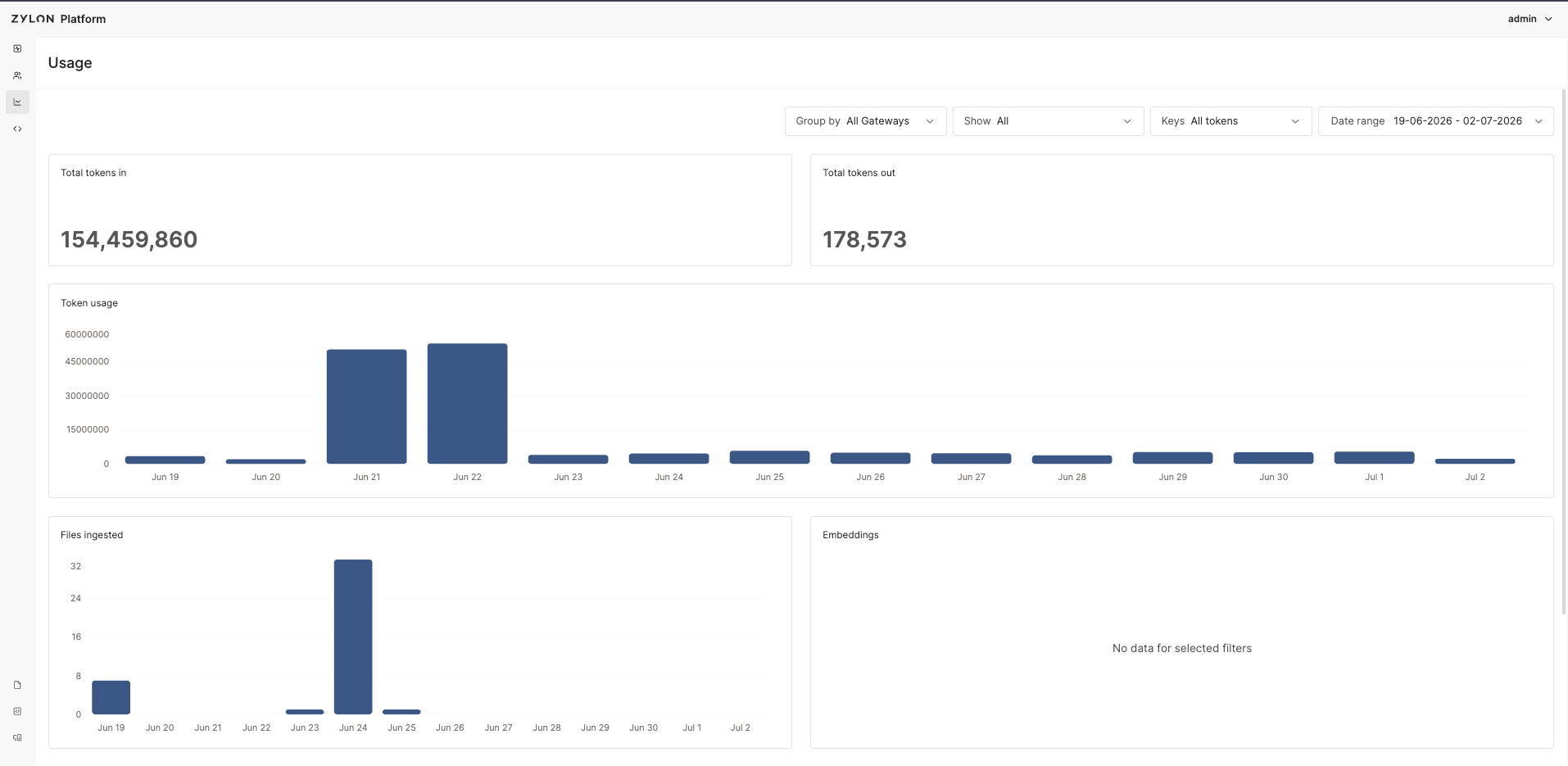
Available information
The dashboard shows summary cards and charts for the selected filters.Token usage metrics
- Total tokens in
- Total tokens out
- Token usage
- Files ingested
- Embeddings
Total tokens in is the total number of input tokens consumed by chat requests in the selected date range and Gateway scope.Use this metric to understand the amount of user, system, and context input being sent to AI providers.
Tool execution metrics
- File searches
- Web searches
The File searches chart shows file-search tool usage found in chat activity.Use this chart to understand when users or applications are asking Zylon to search available knowledge and files during AI interactions.
Filters
Filter state is kept in the page URL, so a filtered view can be refreshed or shared with another authorized Backoffice user.- Group by
- Show
- Keys
- Date range
Group by controls how charts are displayed.
- All Gateways shows one combined total series.
- Gateways breaks charts down by gateway.
Notes and limitations
- The dashboard is read-only. It does not create, edit, or delete platform data.
- Export and download controls are not available from this dashboard.
- Filters by organization, project, user, or account email are not available.
- If no gateways are available, the dashboard shows an empty state.
- If gateways exist but no usage matches the selected filters, charts show a no-data state.
- Usage metrics depend on audit logging and storage. If storage is disabled, the dashboard cannot render usage metrics.
- The dashboard depends on stored application log data. If log records are removed by the cleanup schedule in Cron tasks > Hard Delete, or by the organization’s retention policy, the dashboard cannot show usage for the removed records.
- Stored usage is most useful when system clocks are synchronized across the deployment.